Posts By :

Efi Pylarinou

Advertising is the new high-priced tobacco and vendors are addicted to it

Advertising is the new high-priced tobacco and vendors are addicted to it

Advertising is the new high-priced tobacco and vendors are addicted to it 800 583 Efi Pylarinou

Advertising is the new high-priced tobacco and vendors are addicted to it

We have to fly high to get a different view of what is happening in the world. I started looking at the revenues of Big Tech companies like Amazon to see where growth is happening.

Looking at the 2018 revenues of Amazon, there are three main businesses lines: e-commerce, cloud computing, and ad revenues. What struck me was that growth came from ad revenues which are `lumped` into a generic category labeled `Other`.

Remember 2015 was the first year that Amazon reported cloud revenues separately, revealing specifics about its AWS business.

Today, four years later, Amazon reports advertising revenues in a category that is named `Other`. According to the GeekWire for 2018, Amazon reported $10.1 billion for the “Other” category. According to Amazon`s financial statements this category “primarily includes sales of advertising services, as well as sales related to our other service offerings”. Fortune reported that in Q1 2019,

Sales in Amazon’s “other” segment, which is mostly advertising, increased 34%, to 2.72 billion. The company’s digital advertising franchise has grown into the third largest in the U.S., trailing only Alphabet’s Google and Facebook, researcher EMarketer estimates.

Let me spell this out loud: Amazon`s advertising business is getting ready to be publicly disclosed as one of the main businesses competing openly with Facebook and Google`s Alphabet. This is important because the top marketplaces are Ad driven and don’t seem to intend to switch from that business model. Actually, it isn’t easy for them to switch to another marketplace business model.

Are you aware that merchants that want to sell on the Amazon marketplace have to compete amongst themselves to reach end customers? That means, paying advertising to Amazon in order to move algorithmically up the ranking on the Amazon marketplace. This is the game that each and every Western Bigtech uses in its closed ecosystem. You have to understand the algorithm and pay to play based on the rules of algorithm; be it Amazon marketplace, Facebook, Alphabet.

This realization makes me think that maybe, I only say maybe, merchants borrow from the SME lending arm of Amazon, to finance their advertising campaigns on Amazon. So, Amazon wins twice. I don’t have data on this, so it is only a conjecture.

We know that the technology is there to launch an e-commerce marketplace that vendors can reach end customers (B2C or B2B) without having to pay high advertising fees and incur costs to play on the platform whether they sell or not. Who can execute on this? We just need one success story of such disintermediation. Will it be in selling books or music or baby formula or online education? Will it happen in the West or the East? Will Amazon dare to cannibalize its e-commerce business at least in one area?

What we do know, is that it won’t happen from Facebook whose business is 98.5% based on advertising and their plans for a Facecoin won’t change that business model. It won’t come from Alphabet either, who earns 15% of revenues from non-google ads but 70% from advertising of the Google family (youtube, gmail etc). Both are Titanics in advertising and can`t disrupt themselves.

Advertising is the new tobacco and merchants are addicted to it

A few days after I published this opinion piece, Business Intelligence put out a thorough report `In The Rise of Amazon AdvertisingThis is exactly what Amazon is doing to siphon billions of ad dollars from Google and Facebook and why brands love it`

Do you envy Goldman Sachs? Join Marcus.

Do you envy Goldman Sachs? Join Marcus. 800 534 Efi Pylarinou

Do you envy Goldman Sachs? Join Marcus.

Come on, lets admit it. The world has long envied Goldman Sachs. This never faded away, even while Goldman Sachs was going through an identity crisis after the 2008 financial crisis.

Goldman Sachs is an example of how an incumbent builds a Fintech business. It is not in a lab, nor as a rebranding exercise. Goldman Sachs`s Marcus ecosystem is unique because it is positioned in the value stack below its established competence – an investment bank getting into retail banking and wealth management for mass affluent & the hoi polloi.

Goldman Sachs is an example of how an incumbent financial institution can grow Data pools by offering free access to its analytical tools SecDB – explained in my article in the 2018 WealthTech Book  `Empowering Asset Owners and the Buy Side`.

Goldman Sachs is an example of how an incumbent financial institution can grow Data pools by partnering with Apple on a credit card – Apple has 900 million devices and it is expected that the Apple Card will bring 21 million users to GS by year end.

Goldman Sachs is a publicly traded company that is trading right now below book value and there are more than enough GS analysts out there to get estimates on the revenues from the different GS `consumer banking` new initiatives.

For now, Goldman Sachs has been building up aggressively deposits (the usual way of offering above-market deposit rates when entering a new market). The 3yr old deposit business has accumulated now $46billion across the US and the UK! The expected growth is in the order of $10billion per year going forward.

Marcus has issued $5billion in personal loans. These are unsecured loans that naturally, may worry shareholders, who typically get nervous easily (even though this is crumbs when taken in context).

The credit card part of the Goldman Sachs business is newer and could also grow at double-digit annual rates. Goldman Sachs knows well that credit card lending gets favorable regulatory treatment – less capital is required against this kind of debt – and as long as this holds it is a win-win situation. Why? Simply because Goldman Sachs will get their hands on valuable data from retailers and their shoppers, in order to process the Apple credit card application.

Goldman Sachs hits two birds with one stone. It gets to issue consumer debt on a global scale with lighter capital requirements, and it gets to process new, valuable consumer data globally.

The Apple & Goldman Sachs card economic terms are not known. Even if they are not that juicy for Goldman Sachs and even though the GS logo is on the back of the Apple card; the consumer data access and processing from 40 countries that this brings to the table is invaluable.

Marcus Goldman Sachs

The Apple & Goldman card will grow an important global data pool for Goldman Sachs to leverage in its planned WealthTech offering.

Apple credit card

In case you haven’t noticed, Marcus has been moved into the Goldman Sachs asset management unit, which will be renamed the consumer and investment management division. The October 2018 memo says that Marcus has plans to “launch a broader wealth management offering.”

A global consumer outreach is being built in preparation for this broader wealth management offering. And for all those concerned about a growing unsecured loan book, Goldman has great risk management experience and could with great elegance securitize part of this debt, once there is enough to do so. Elizabeth Dilts and Anna Irrera, raise this point too in ` Goldman’s Apple pairing furthers bank’s mass market ambitions`.

Marcus is a brand whose heritage is in risk management and investment banking. They will use these competencies to manage growth in their retail-focused wealth management offering. This is a huge advantage compared to Fintechs that started with unbundling a specific financial service (be it loans, or deposits, or investments) and is now, growing by re-bundling additional services (e.g. adding robo-advisors to loans, or deposits to trading, etc).

Be first in line for my best content

Mathematics and nature's way

We use language and law to collaborate; now is the time for Mathematics and nature’s way

We use language and law to collaborate; now is the time for Mathematics and nature’s way 800 533 Efi Pylarinou

We use language and law to collaborate; now is time for Mathematics and nature’s way

Christine Lagarde moderated a panel with two Central bankers (European Central Bank and CB of Kenya), an incumbent (JPMorgan) and a disruptor (crypto fintech company Circle). The topic was “Money and Payments in the Digital Age.”

CCN covered the panel discussion with a narrative of `In crypto we trust`. Coindesk covered it with a rhetorical question narrative of `In Math we Trust?`.

I had the privilege of attending the talk of Dr. Zhang on the topic “In Math we Trust” and moderating a session with him at the LCX Blockchain Series, in Vaduz, Liechtenstein. Dr. Zhang, was a renowned Chinese American scientist, a physics professor at Stanford and I remain inspired by his narrative. [1]


The powerful origin of the narrative `In Math we could Trust`

Let’s go back to the Greeks where thought leadership of all theoretical and foundational concepts started. Dr. Zhang spoke about Archimedes, his Eureka moment which permitted gold to become a medium of exchange. He spoke about the 2nd law of thermodynamics which states that the natural world is mostly in disorder and rarely in order (consensus state). In nature, order and consensus can only exist in subsystems. And when this happens it happens at a cost. In physics parlance, in order to reach order and consensus in nature, there needs to be some entropy (disorder) produced and dumped outside the subsystem for it to reach consensus.

Let’s tie this to the computing world. In distributed computing, the Fischer-Lynch-Patterson theorem is the analog of the 2nd law of thermodynamics, and proves that there is No deterministic algorithm that can be a master algorithm for the system to reach consensus. So, once again science like in nature, proves that to reach consensus we need to pay a cost. This is where the Proof of Work, an old cryptographic concept, comes into play.

One way we can reach a consensus regarding transactions is by using Proof of work. This is a way, to reach consensus on the Temporal Order of transactional data. The cost we pay is the amount of electricity we burn to solve the puzzle (which is on the other hand easily verifiable). Consensus on time-stamped verification of transactional data, can be reached through this process that dumps entropy (electricity in the case Bitcoin Blockchain) outside the system.

In Math We Trust

Our world historically has been oscillating between centralization and decentralization.

Looking back in history for more evidence: The circuit switch technology created the then seemingly indestructible monopoly of ATT. This monopoly was only destroyed form the decentralized TCP/IP protocol that gave birth to the internet and to the gradual adoption of VOIP. As the internet became the dominant technology, several other monopolies grew out of the content generated on it; e.g. Google and Facebook. And now, we are in the beginnings of what Paul Nunes coins as the next Big Bang Disruption.  Blockchain is threatening the powerful giants built on the first open source protocol, the internet, with a wave of data decentralization.

The internet has evidently increased connectedness. However, its design is not a collaborative one. The world that is built on top of this open protocol, the internet, is not a world that is fairer and that builds trust. The “trading” or any exchange of information on the web, is not collaborative. The central entities, the Googles and Facebooks, are the ones that are organizing the information and the data on the web. The first, step in the process of decentralizing the web, is to break these data monopolies.

Blockchain is a decentralized mechanism in which trust is built-in with mathematical formulas. As Plato preached, mathematics is the ONLY internally consistent language. As Nick Szabo preached, in his God protocols, mathematics is the language of God. God in this context is the entity that acts in the interest of everybody.

Blockchain protocols are presenting us with an opportunity to build on protocols with built-in consensus mechanism governed by math. Mathematics governance guarantees fairness and trust.

Dr. Zhang argued in this speech that we humans have developed languages and law in our attempts to organize and collaborate in societies and reach consensus on various issues. He now believes that we are stepping into the most advanced era in which Mathematics will be trusted in order to reach consensus. Admittedly from all the sciences (social, political, physics etc.) mathematics is the branch of knowledge with the highest level of consensus and in which we trust.

Dr. Zhang emphasized that we live in a world that is based on theoretical mathematics that were developed with no real-world application in mind and are now being used in all sorts of experimentations as we are in the early stages of the blockchain development. From hash functions to more such `abstract first` math concepts. 

  • Public/private key based on elliptic curve
  • Cryptographic hash function
  • Zero-knowledge proof. Zk-snark and Zk-stark
  • Secure multi-party computation, differential privacy
  • Formal verification
  • Homomorphic encryption
  • Dag, directed acyclic graph: money grows on trees!

Source: from Dr. Zhang`s talk; see full video here.

The choice we have is to `Trust in Math` and the laws governing nature

Look at the 2nd law of thermodynamics, nature, and the lessons from the earlier tech disruption waves. Once we embrace the dynamic, digital, and unstable world we live in; we will realize that we have a great opportunity to embrace theoretical mathematics in designing governance and the Internet of value.

It will be a trustworthy design with inherent instabilities as in nature and as outlined in the 2nd law of thermodynamics. We have to move away from the belief that forced consensus mechanisms like regulations can provide stability. We have to become like nature.

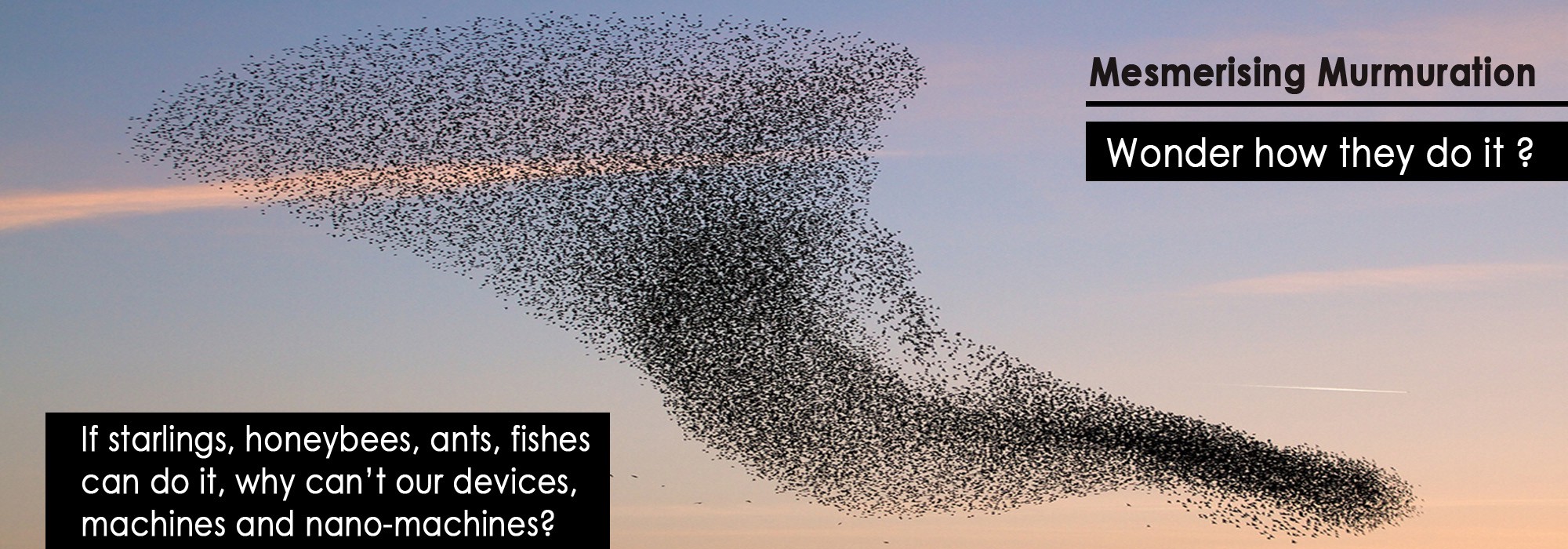
`Swarming of bird flocks, murmuration of starlings, ant colonies, animal herding, fish schooling, bee hiving, so on and so forth. Thousands of them moving in perfect harmony, as if each one knew exactly what to do to produce the collective spectacle that they were so skilled of enacting in nature.` excerpt from A Marriage Made In Heaven: AI & DLT

CASI

[1] I delayed this post because of the unfortunate and sudden passing away of Dr. Zhang late last year.

Be first in line for my best content

Subscribe for our news updates and exclusive content.

Get all my best content in your inbox

Starting a project?

Contact Efi

Join my social circle

Social media

Fintech and Blockchain advisor

Switzerland
Tel: +41 78 944 3470

© 2024  Efi Pylarinou. Developed by Core Dynamix Digital Agency

    Privacy Preferences

    When you visit our website, it may store information through your browser from specific services, usually in the form of cookies. Here you can change your Privacy preferences. It is worth noting that blocking some types of cookies may impact your experience on our website and the services we are able to offer.


    Our website uses cookies, mainly from 3rd party services. Define your Privacy Preferences and/or agree to our use of cookies.